Modular blocks
Content is organized into clear sections describing common operational components, from data intake to review checkpoints.
Global Trade AI delivers curated overviews of automation-powered workflows and UI patterns tailored for finance-centric environments. Our content highlights core modules, configuration surfaces, monitoring dashboards, and policy routing so professionals grasp how these systems are typically organized.
Global Trade AI delivers concise, readable pages that distill product-style concepts used in financial services, including data views, control dashboards, and review workflows. The site emphasizes accessibility, responsive layouts, and consistent policy navigation across pages.
Content is organized into clear sections describing common operational components, from data intake to review checkpoints.
Readable typography, keyboard-friendly navigation, and predictable layouts ensure smooth browsing on desktop and mobile.
Terms, privacy, and cookie pages are linked consistently to help readers locate essential information with ease.
Global Trade AI aims to present finance-focused workflow concepts in a balanced, fact-based voice that prioritizes clarity, consistency, and transparent policy visibility. The platform helps readers grasp common interface elements and routine operations without delivering tailored guidance.
Concise paragraphs and scannable cards help users pinpoint key points quickly.
Descriptions emphasize configuration surfaces and monitoring routines commonly used in operations.
Policy links and page structure remain uniform to support predictable browsing.
Global Trade AI is built around practical standards used in financial-services publishing: transparent disclosures, precise phrasing, and a focus on real-world context. The principles below illustrate how we approach content creation and page structure.
Content is crafted to inform, highlighting interface patterns and workflow components without bias.
Policy routing and consent wording stay visible and consistent so readers can review key pages with ease.
Sections prioritize how systems are arranged: data views, controls, monitoring routines, and review checkpoints.
Pages are designed to keep policy access consistent and to encourage careful reading of linked documents.
Layouts stack neatly on smaller screens to minimize friction and avoid horizontal scrolling.
Content undergoes review for consistent terminology, accessible structure, and well-aligned sections.
Visit the signup page to unlock additional informational modules and page layouts.
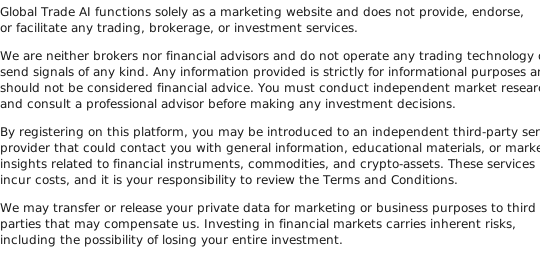
This website functions solely as a marketing platform and does not provide, endorse, or facilitate any trading, brokerage, or investment services.
Read More